Across the acreage
Forestry Mulching
Brush, small trees and undergrowth ground in place and spread back across the cleared ground as mulch.
Chapter 01
When the brush gets ahead of the fence line
Give an East Texas lot a few wet years and the back fence line turns into a wall of briars, volunteer saplings and vines you cannot see through. A bulldozer fixes that by scraping everything into a pile, and a match fixes the pile. Forestry Mulching fixes it without either one.
JR Tree Service puts the work simply on its own page: specialized equipment used to “grind vegetation, such as trees, shrubs, and brush, into mulch, which is then spread across the cleared area.” That is the whole idea, and it is why the ground looks finished when the machine drives off.
It suits the places around Chandler and Tyler that went quiet for a few seasons: back acreage behind a house, a pasture edge the pines have crept into, a fence line nobody has walked since the last owner.
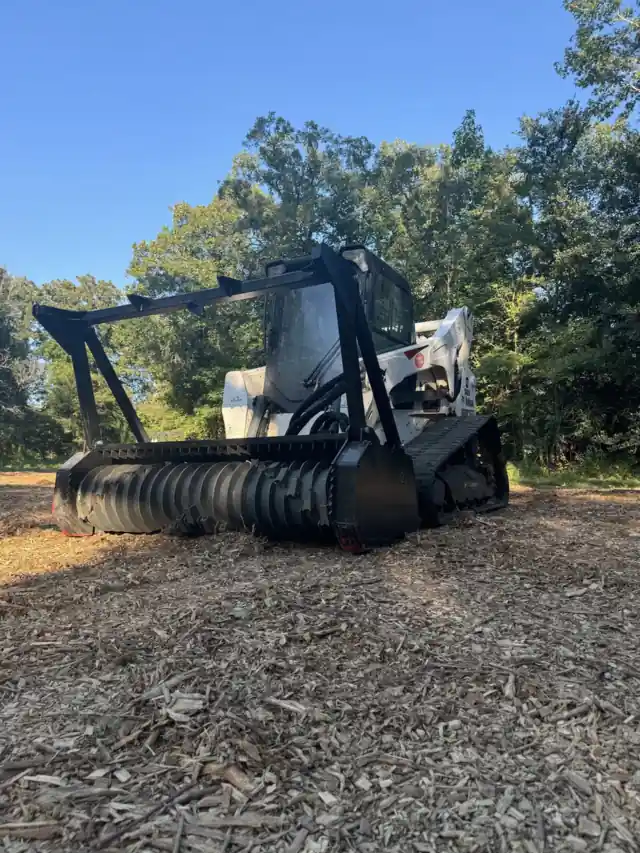
A forestry mulcher head on a track loader sitting on freshly mulched ground with pines behind
How the mulcher works the ground
The mulcher head rides on a track loader, the same kind of machine JR runs with a grapple on removals. It takes brush, small trees and undergrowth in a pass, and the chips drop right where the plant stood. Nothing goes on a trailer and nothing goes to a burn site.
Before the head touches anything, Jesus walks the line with you, the way he does for a removal estimate. You point out the oaks and pines that stay, the fence, the power line along the road. Then you get a free estimate, and the cutting follows what you pointed at.
Tracks spread the machine across red clay that turns soft after a rain, so the drier week is the better week to mulch. Say what the ground has been doing when you call and we will tell you whether to wait.
Chapter 03
What the ground does with the mulch
The chips are not waste. On JR Tree Service's own page, mulch spread back on the ground “acts as a natural organic fertilizer, replenishing nutrients and promoting new vegetation growth.”
Their words for where that ends up: “This encourages the return of native plants and wildlife, creating a thriving ecosystem.” A layer of chips also shades the soil and slows the rain, so bare clay does not wash toward the road the first time a thunderstorm parks over Tyler.
Stumps you want gone below the grass line are a second pass with the grinder, and a big tree you want down whole is a removal. Call, say what you are looking at, and we will tell you which job it is.
5.0 from 177 Google reviews · Free estimates · (903) 952-7502
Same land, two ways to clear it.
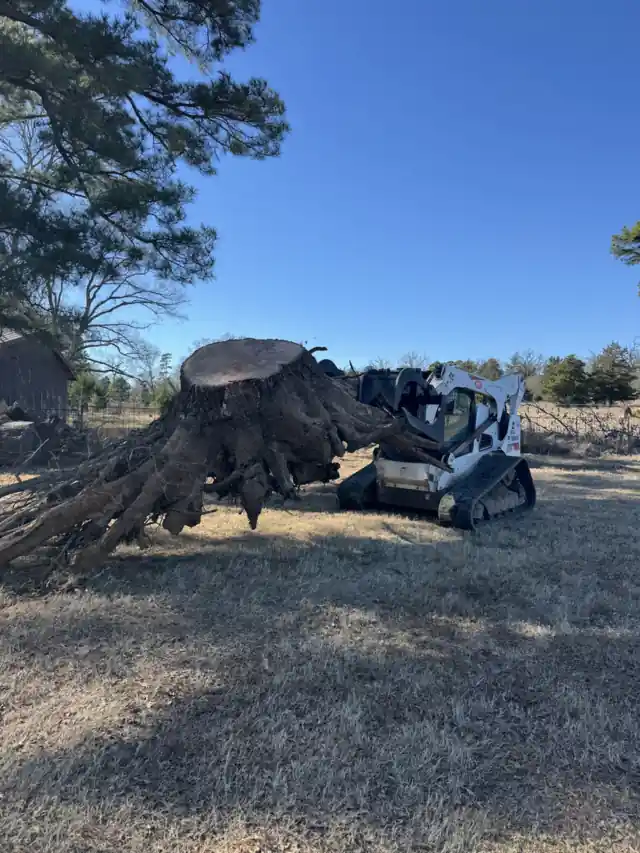
Both get you open ground. What differs is what is left on it afterwards, and who has to deal with the leftovers. Stumps are the one thing mulching does not take below the grass, and that is a separate pass with the stump grinder. A tree too big for the mulcher head comes down first as a removal.
Mulched in place
- The topsoil stays where it formed, held together by roots that are still in the ground.
- A layer of chips covers the ground the day it is cut.
- One machine and one pass, with no line of trucks hauling brush in and out.
- Nothing to burn, so no smoke and no waiting on a county burn ban.
Piled and burned, or bulldozed
- Topsoil gets scraped up with the brush and pushed into rows, leaving bare red clay behind.
- Bare clay sits open to the first heavy rain and washes toward the road.
- Burn piles smoke for days, and the burn waits on the wind and on the burn ban.
- Roots come out whole, and every one leaves a hole that has to be filled and raked.
Walk the line with Jesus.
Call or text with what is growing where you want it cleared. Jesus comes out, looks at it with you and gives you a free estimate. Ask about stumps or a removal on the same walk.