Below the grass
Tree Planting
The right tree in the right spot, planted at the right depth so it outlives the people who planted it.
Chapter 01
The tree that was wrong the day it went in
A young tree that struggles in year three was usually in trouble the day it was planted: set too deep, jammed against a foundation, or a species whose full-size crown was never going to fit that spot.
JR Tree Service says it plainly on its own page. Tree planting is “about more than placing a tree in the ground,” and it takes “proper planning, selection, and techniques” to get healthy growth and long term survival.
The crew spends its working days taking big trees out of yards around Tyler and Chandler, so it has seen what a full-grown pine or oak does to a roof, a fence and a driveway. That is the best argument for a smaller tree, set farther from the house than feels necessary.
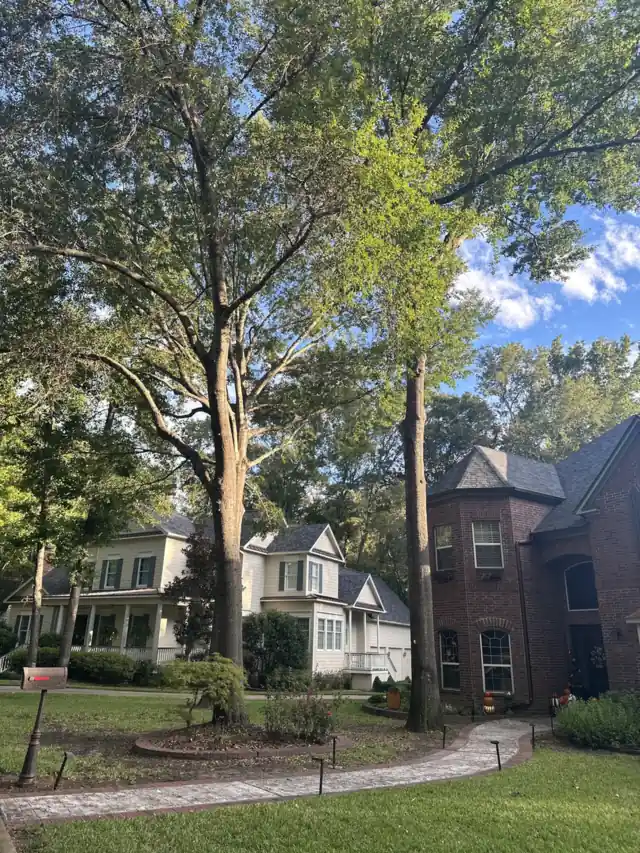
Mature hardwoods shading a curved front walk and brick homes in an established Tyler-area neighborhood
Planning the spot, choosing the tree, setting it right
Planning starts with where the tree will be in thirty years, not where it looks good next spring. Stand on the spot and look up and around: the roof edge, the power and cable lines the crew works beside, the neighbor's fence, the driveway.
Selection means a tree that suits East Texas: August heat, a dry spell, then a week of rain on red clay that drains slowly. Ask for the mature size before you ask about fall color.
Technique comes down to the hole and the depth. Dig it wide and no deeper than the root ball, find the root flare where the trunk spreads out into the roots, and set that flare right at the soil line. A tree buried past its flare is slow to recover and slow to root out.
Chapter 03
Water, mulch and the first summer
Taylor Heaton had three very large pines taken out of the front yard, one of them 80 feet tall, and had the crew plant two trees and prep the yard for grass in the same job. That order works: the big tree comes out, the replacement goes in, and the lawn gets sorted before the crew leaves.
After planting, the job is water. Soak the root ball slowly instead of sprinkling the leaves, and keep it up through the first summer while the roots have not yet reached past the planting hole. Clay holds water, so check with a finger before you add more.
A ring of mulch two or three inches deep, pulled back from the trunk instead of piled against it, holds the moisture in and keeps the mower away from the bark. Skip heavy pruning early. Take out a broken limb and let the crown grow.
5.0 from 177 Google reviews · Free estimates · (903) 952-7502
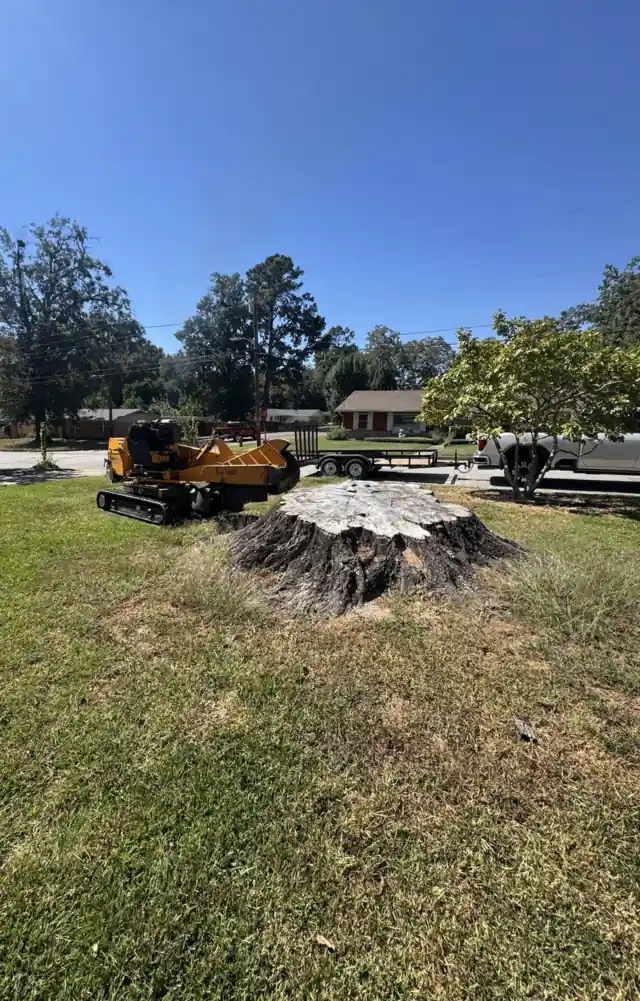
After a removal
What goes back in the hole.
A planting often starts as a removal and a ground stump, and the replacement goes into ground that has been torn up. Here is what to get right in that ground.
- The spot itself.
- Once the stump is ground below the grass, the ground there is chips and loosened soil. Chips settle and rot, so scoop them out and fill with clean soil before anything goes in that spot, or plant a few feet to the side.
- The root flare.
- It sits at grade, level with the soil, not buried under backfill or a mound of mulch.
- Distance from the house.
- Plant for the width of the full-grown crown, not the size of the pot. Farther from the foundation, fence and wires than feels necessary.
- The first summer.
- Slow, deep watering and a mulch ring pulled back from the trunk. Check the clay before you water again.
“They also planted two trees, prepped our yard to plant grass, and did a fantastic job cleaning everything up.”
Tell us where it goes.
Call or text with the yard, the spot you have in mind and what came out of it. Jesus comes out, looks at it with you and gives you a free estimate for the planting.