Up in the canopy
Tree Trimming
Thinning, mistletoe out, low limbs raised and cuts sealed, so a tree handles Texas heat and storms without dropping branches on the roof.
Chapter 01
What a crowded crown costs you
Trees in East Texas take a beating. Summer heat bakes them, storms test every limb, and a crown that has grown thick and heavy gives the wind more to grab. Low branches hang over the roof and the drive, mistletoe settles into the limbs, and dead wood waits for the next thunderstorm to drop it where somebody parks.
Billy Haskins had it at the scale of a whole yard: 25 trees, and in his words “everything was overgrown”. Part of it was the overhang from his neighbors' trees across the fence, and Jesus and his crew cut that back along with the rest. A tree that has gone a few seasons without a trim usually needs more than a haircut, and an honest estimate starts by looking at what's up there.
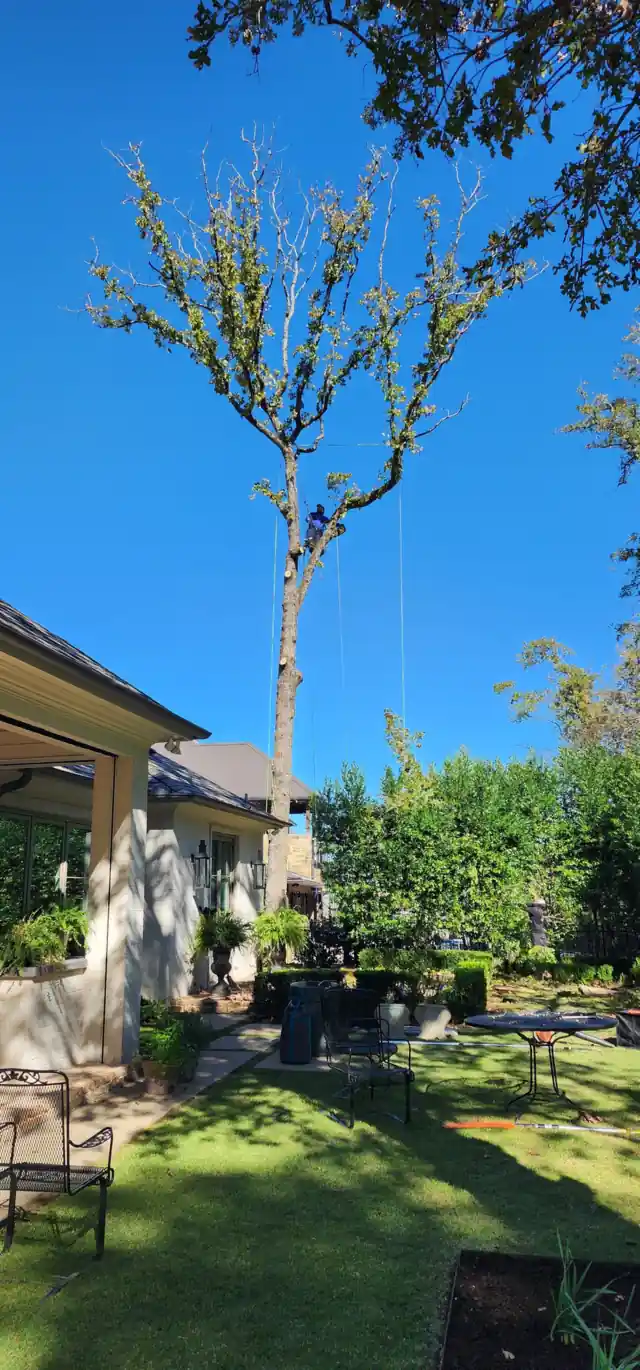
A tall East Texas tree limbed up clean beside a house against a blue sky
Small cuts, in a deliberate order
Dan Herrin hired JR to trim four large trees he had planted about 27 years earlier, plus a couple of smaller ones. The list he wrote afterward is the best description of a trim we've seen: thinning, removing mistletoe, removing low hanging branches, and “sealing the cuts to help guard against insects”. He also noted the weather didn't cooperate, with rain and thunderstorms, and the work still got done.
The cleanup is part of the trim. Dan wrote that Jesus came well equipped, with a chipper for the brush, and used a commercial leaf blower to lift everything off the lawn “so my lawn care guy will not be angry”. Limbs that go up into the canopy leave in the chipper, not in a pile along your curb.
Chapter 03
Keeping it under control after the first trim
Billy Haskins had 25 trees across the whole yard back in shape in one day, and he plans a yearly trim.
That plan makes sense. Billy wants a yearly visit “just to keep everything in shape and under control”, and a tree trimmed every year is much less likely to reach the point where the job turns into a removal. Trimming ahead of storm season also means fewer weak or crossing limbs for the wind to snap.
If a tree is past saving, we'll say so plainly at the estimate. Sometimes the right trim is a removal, and Jesus will walk you through the difference before anyone climbs.
5.0 from 177 Google reviews · Free estimates · (903) 952-7502
Canopy
What a trim includes.
Pulled from what customers wrote about their own jobs. A trim is not one cut. It's all of these.
Up in the tree
- Thinning
- Opens the crown so wind moves through it instead of leaning on it.
- Mistletoe out
- Cut from the limbs it has taken hold of, one of the jobs Dan Herrin listed.
- Low limbs raised
- Clearance over the roof, the drive and the walk.
- Cuts sealed
- Fresh wounds sealed to help guard against insects.
- Overhang cut back
- Branches reaching over a fence from a neighbor's tree, trimmed back to the line.
Back on the ground
- Chipper on site
- Brush goes through the chipper in your yard, so there is no pile left behind.
- Leaf blow-out
- A commercial blower lifts leaves, chips and sticks off the lawn.
- Yearly plan
- A short visit each year to keep it all in shape, the way Billy Haskins is planning it.
If a tree has gone too far, the answer may be a removal, and the stump after it is its own job on the stump grinding page.
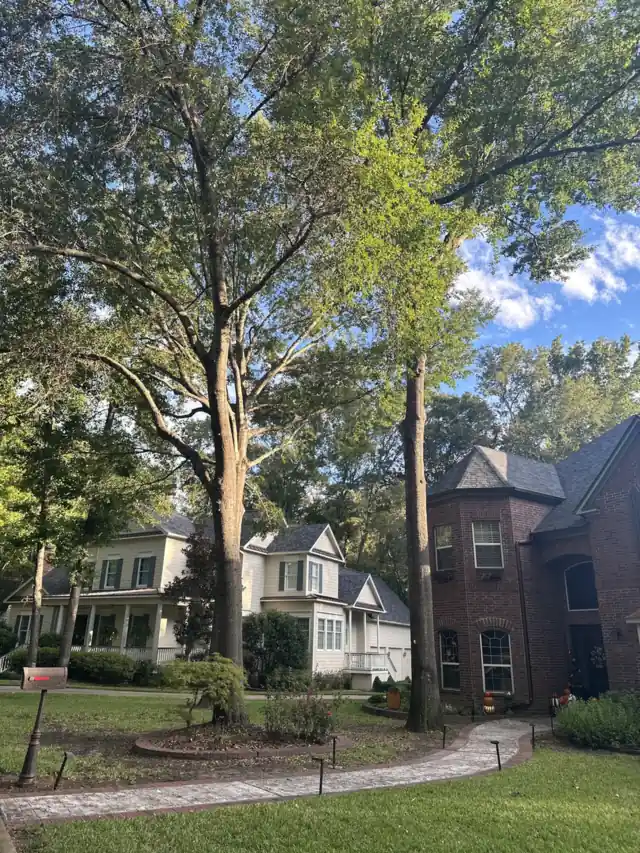
Look up. What's hanging over the roof?
Call or text Jesus about the trees in your yard. He'll come out, look at what's up there with you and give you a free estimate in Tyler, Chandler and the towns around them.